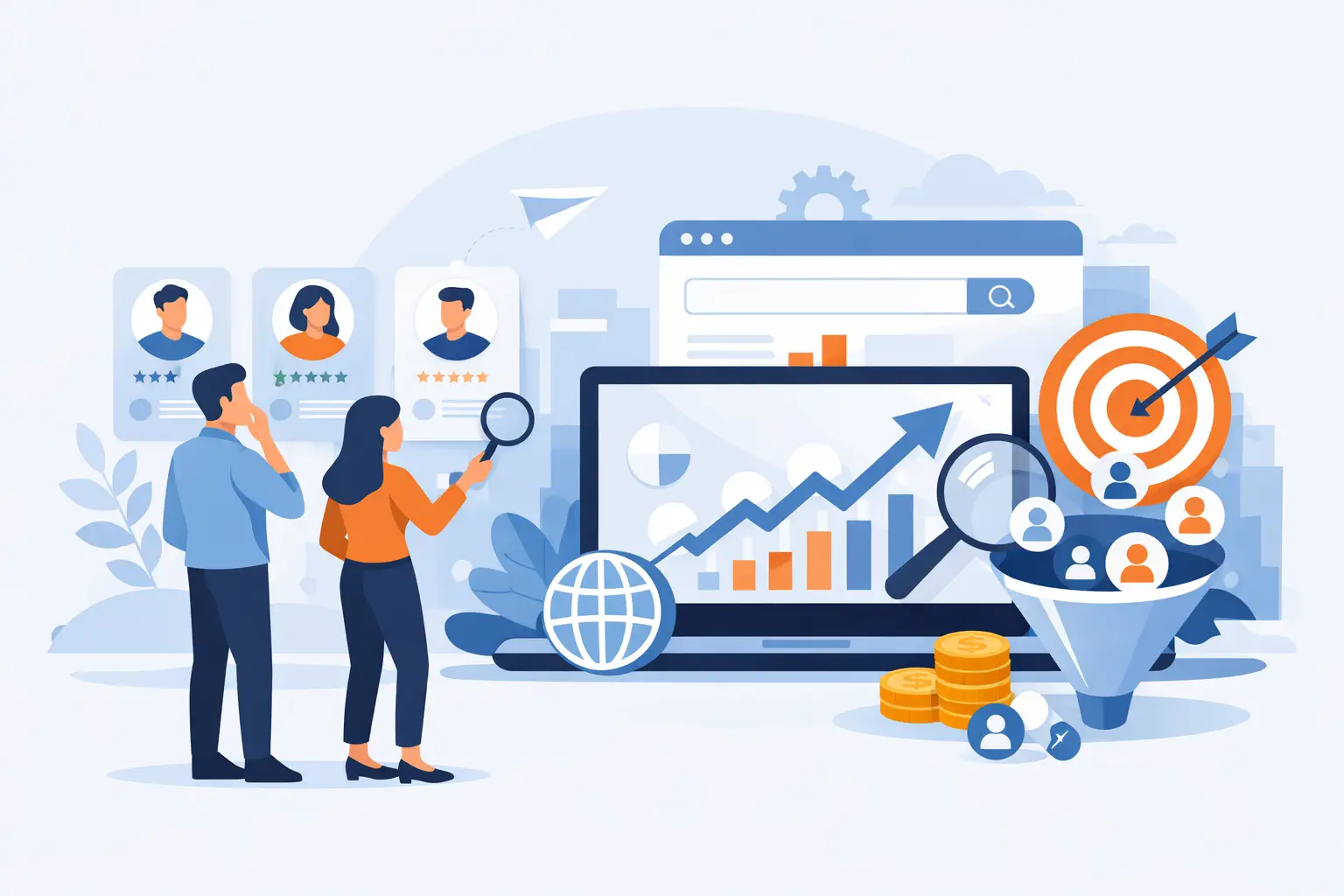
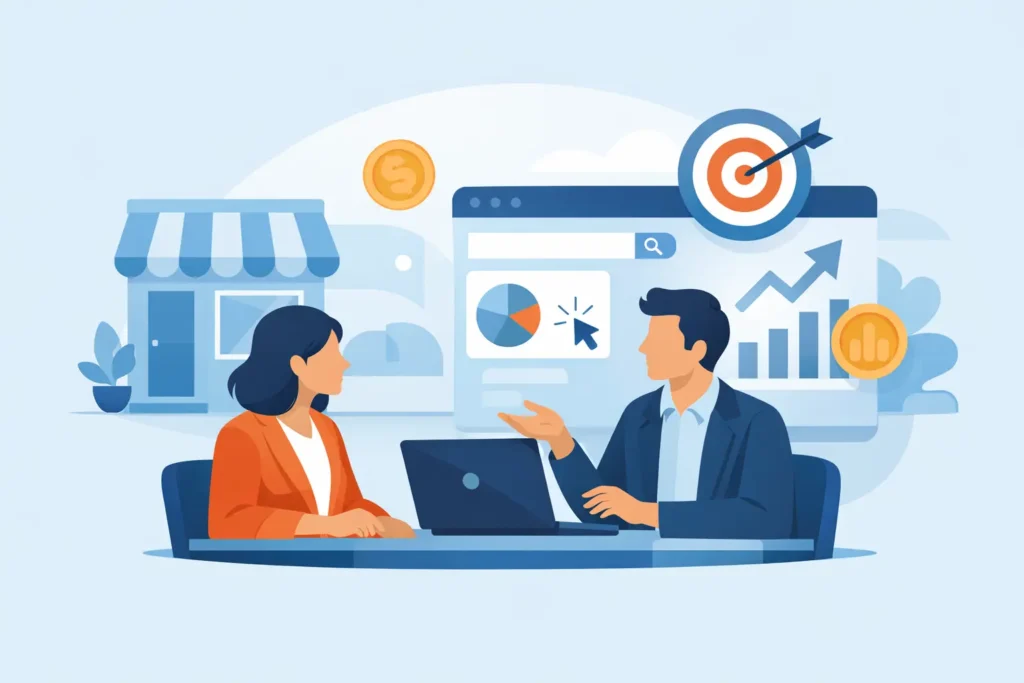
A small business can burn through a monthly ad budget faster than most owners expect. A few broad keywords, weak landing pages, and slow optimization can turn paid search into an expensive lesson instead of a lead source. That is why choosing the right PPC agency for small business growth is less about finding someone to run ads and more about finding a partner who can protect spend, improve conversion rates, and build a system that supports real revenue.
For smaller companies, PPC is rarely forgiving. Budgets are tighter, margins matter more, and every click needs a clear purpose. Large brands can afford testing mistakes for longer. Small businesses usually cannot. The agency you hire needs to understand that difference from day one.
What a PPC agency for small business should actually do
A good agency does much more than launch campaigns in Google Ads or Microsoft Ads. It should start by understanding your business model, average customer value, sales cycle, service area, and capacity to handle leads. If those basics are skipped, even technically sound campaigns can miss the mark.
The right partner should also be able to answer a practical question early: what does success look like for your business? For some companies, success means phone calls from high-intent local prospects. For others, it means form fills, booked consultations, ecommerce purchases, or qualified pipeline. Without that alignment, reporting can look strong while business impact stays flat.
That is where many small businesses get frustrated with agency relationships. They are shown impressions, click-through rates, and traffic charts, but not enough clarity on lead quality, cost per acquisition, and return on ad spend. Performance marketing should connect to outcomes, not just platform metrics.
Why small businesses need a different PPC approach
Small businesses are often told to copy what larger competitors are doing. In paid media, that is usually the wrong move. Bigger advertisers can outbid you on broad terms, absorb more wasted clicks, and support campaigns with larger creative teams and bigger landing page investments.
A better strategy is usually more selective. That may mean focusing on high-intent keywords, tighter geographic targeting, dayparting around peak response hours, or narrowing campaigns to the services that generate the best margins. In many accounts, efficiency beats scale in the early stages.
This is also why customization matters. A local contractor, a law firm, a SaaS startup, and a multi-location medical practice should not be managed with the same playbook. Their sales cycles, lead values, competition, and compliance concerns are completely different. A serious agency will build around those realities instead of forcing your business into a preset package.
Signs you have found the right PPC agency for small business needs
The best agency relationships usually feel clear from the beginning. The team asks specific questions, explains trade-offs honestly, and does not promise instant wins without understanding the account.
Look for an agency that talks about conversion tracking before it talks about scaling spend. If your calls, forms, purchases, or booked meetings are not tracked accurately, optimization becomes guesswork. You also want a partner that looks beyond ad performance alone. If keywords are strong but landing pages are weak, they should say so. If lead volume rises but quality drops, they should address that too.
Transparency is another strong signal. You should know what is being done, why it is being done, and what the next optimization priorities are. That does not mean you need a flood of jargon or bloated reporting. It means your agency can explain performance in business terms and make recommendations you can act on.
Strong agencies are also proactive. They do not wait three months to point out that your search terms are too broad or your budget is spread across too many campaigns. They identify issues early and adjust before wasted spend becomes a pattern.
What to watch out for
Some agencies sell PPC management as if campaign setup is the hard part. It is not. The real value comes from ongoing optimization, search term review, bid adjustments, ad testing, audience refinement, and conversion analysis. If an agency sets up an account and then mostly leaves it alone, performance usually plateaus.
Be cautious with guaranteed results. No agency can ethically promise exact lead volume or cost per lead without major caveats. Competition shifts, click costs rise, seasonality changes demand, and landing page quality affects outcomes. A credible agency will talk about benchmarks, opportunities, and scenarios, not certainty where certainty does not exist.
You should also be wary of generic reporting. If every month looks like the same dashboard export with little interpretation, that is a problem. Small businesses need context. Why did cost per click increase? Which campaigns produced qualified leads? What should be cut, expanded, or tested next? Those are the questions that matter.
Another red flag is poor alignment between PPC and the website experience. Paid traffic can only do so much if pages are slow, trust signals are weak, or forms are too difficult to complete. Good agencies do not treat ads in isolation.
Questions to ask before you hire
The right questions often reveal more than the proposal itself. Ask how the agency approaches budget allocation for a small business with limited spend. Ask how they define a qualified lead. Ask what they need from your team to launch properly and what they will own directly.
It is also useful to ask how they handle underperforming campaigns. A thoughtful answer should include diagnosis, testing, and adjustment rather than vague reassurance. You want to hear that they review search terms, analyze device and audience performance, improve ad messaging, and assess landing page friction.
Ask about communication too. Who will manage the account? How often will you meet? What will reporting include? Small businesses are often underserved when communication is weak, because problems go unnoticed longer and opportunities are missed.
If the agency also understands related channels such as SEO, content, and conversion optimization, that can be a major advantage. PPC works better when it is informed by broader search strategy. A keyword converting well in paid search may shape organic content priorities. A strong organic page may support more efficient paid campaigns. The best growth programs are connected, not siloed.
Budget, expectations, and the reality of performance
One of the hardest parts of PPC for small businesses is setting realistic expectations. Budget matters, but strategy matters just as much. A smaller budget can still perform well if campaigns are tightly focused and conversion tracking is accurate. A larger budget can still fail if targeting is loose and landing pages do not convert.
This is where honest planning matters. In some markets, a modest budget can generate meaningful lead flow quickly. In more competitive industries, the same spend may only support a narrow campaign footprint at first. That does not mean PPC is a bad fit. It means the account needs discipline, prioritization, and a phased approach.
A strong agency should be comfortable saying, this budget is enough to validate one core service line, but not enough to dominate every keyword category at once. That kind of clarity helps business owners make better decisions and avoid disappointment driven by unrealistic campaign scope.
Why partnership matters more than platform access
Most agencies have access to the same ad platforms. What separates results is strategy, execution, and accountability. Small businesses do not need a vendor who simply checks technical boxes. They need a team that understands how paid search fits into a larger growth plan.
That is especially true when lead generation is the goal. High lead volume means little if the wrong prospects are clicking, calling, or submitting forms. A capable agency looks at quality, close rates, and business fit, then refines campaigns around that data.
This partnership mindset is where experienced teams stand apart. Agencies like Triune Digitals focus on tailored planning, hands-on optimization, and performance that can be measured against business outcomes, not vanity metrics. For small businesses trying to grow without wasting budget, that difference matters.
The best choice is rarely the cheapest option or the agency with the boldest pitch. It is the team that understands your constraints, communicates clearly, and treats your ad spend with the same seriousness you do. When that fit is right, PPC stops feeling like a gamble and starts working like a growth channel.