
The way people search online is changing. Google has been the go-to search engine for years, but AI search vs Google search is becoming a critical comparison. This evolution is changing how businesses approach digital marketing.
Understanding the difference between Google vs AI search engines helps businesses adjust their strategies. Optimizing for both is essential to stay ahead of the competition. By optimizing for AI search optimization and Google, businesses can effectively reach customers.
What AI Search Is and Why Businesses Should Care
AI search refers to search engines that use artificial intelligence to understand user intent and provide direct answers instead of only listing web pages.
AI-powered search platforms analyze user questions and generate direct answers, breaking down queries to provide context-driven responses.
For businesses, understanding how AI search is transforming SEO is essential. Ranking on a search page is no longer enough; content needs to be structured in a way that AI search engines and Google can both interpret and reference clearly.
How AI Search Is Changing the Way People Find Information
People are increasingly searching in a conversational manner. Instead of simply entering keywords, users ask full questions in AI search tools, expecting immediate answers. This shift is changing how AI search and traditional search engines work.
Google search often requires users to sift through several pages, although features like snippets are beginning to provide more direct answers. This marks a significant shift in how AI search is changing SEO, emphasizing context over keywords.
To better understand this transformation, let’s look at some popular AI search platforms that businesses can leverage to stay ahead.
Popular AI Search Platforms Businesses Can Use
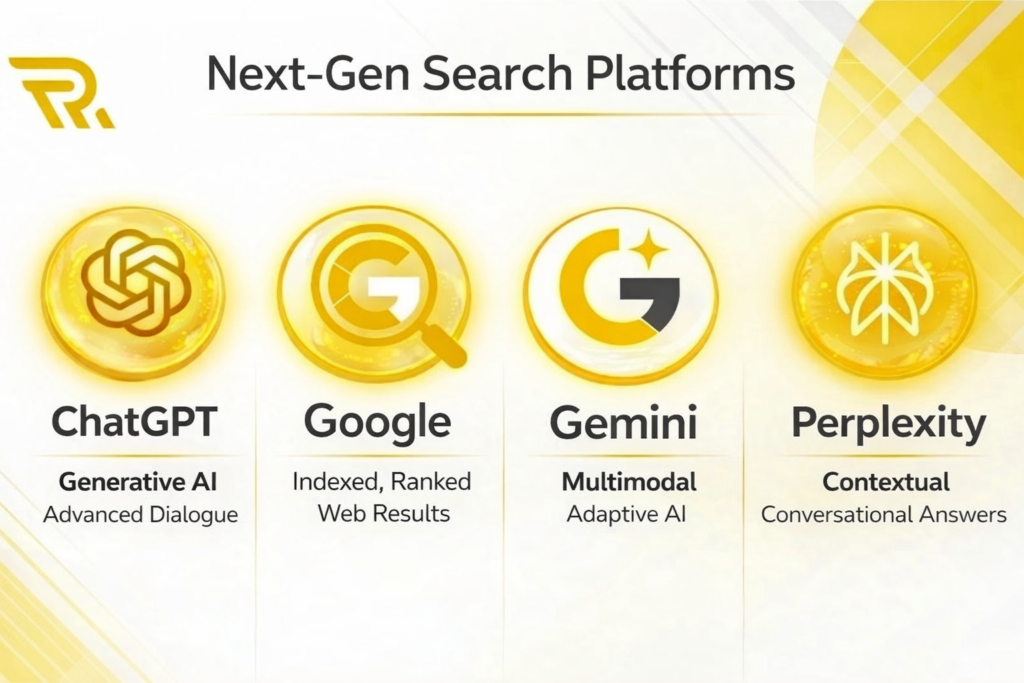
ChatGPT: Provides direct, conversational answers to user queries. Businesses should focus on creating content that is easy to understand and respond directly to questions.
Google AI: Enhances traditional search by understanding complex queries and delivering better context for search results. Businesses can optimize content by targeting more specific user intents.
Gemini: A Google-developed platform that uses machine learning to offer personalized search results. Content should be tailored to conversational queries for optimal performance.
- Perplexity: This platform uses natural language processing to provide context-based answers. Businesses should ensure their content directly addresses user questions for greater visibility.
Key Differences Between AI Search and Google Search
AI search engines prioritize delivering direct, concise answers by understanding user intent and context. In comparison, Google search results typically rank web pages based on links and keywords, without always providing a direct answer.
AI Answers vs Google Links: What Users Actually See
- Results Generation
AI search engines use advanced algorithms to break down queries into smaller sub-questions, offering context-driven answers. In contrast, Google search relies on traditional ranking factors like keywords, backlinks, and authority. - User Experience
With AI search, users get an immediate answer without having to click on any links. Google search usually shows a list of links, and users need to click through them to find the answer, though Google now offers some direct answers with featured snippets. - Source Transparency
AI search engines vs Google differ in transparency; AI tools provide answers sourced from multiple platforms, whereas Google shows links to the sources. - Business Impact
AI search optimization requires content to be easily referenced, while Google search focuses on ranking pages based on traditional SEO factors. - Speed & Efficiency
AI search provides instant answers, making it faster, while Google search often needs users to click through multiple results for information.
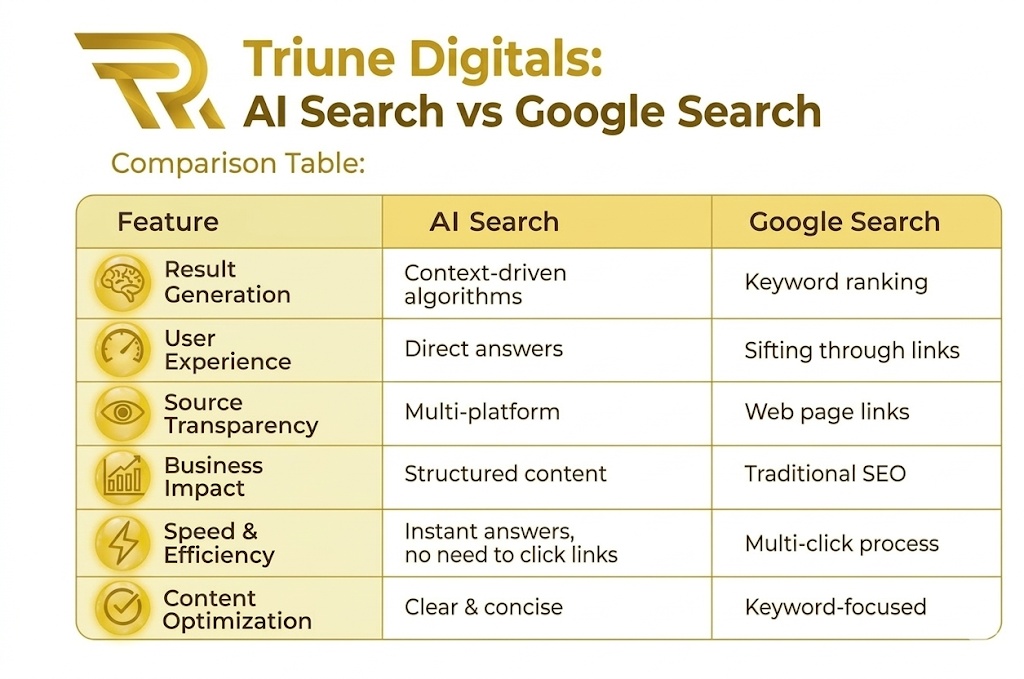
The main difference is that AI platforms generate direct answers from multiple sources, while Google often provides a mix of direct answers and links to web pages.”
How to Optimize Your Content for Both Google and AI Search
To stay competitive, businesses need to optimize content for both Google search and AI search engines. Here are some actionable steps:
- Focus on Keywords and Context: For Google search optimization, use relevant keywords, but for AI search optimization, structure content to answer specific questions and provide clear, direct answers.
- Structure Your Content Effectively: Use clear headings, subheadings, and bullet points to help both Google and AI search identify key information.
Optimize Content With Keywords and Context for AI and Google
- Use Keywords Naturally: For Google search optimization, naturally include relevant keywords to rank well. For AI search, focus on how your content answers specific questions.
- Match User Intent: Tailor your content to answer user queries directly, covering various angles and sub-questions.
Write Content That AI Tools Can Understand and Reference
Ensure your content is optimized for AI search engines by structuring it clearly. Use subheadings to break content into sections, helping AI systems identify key topics.
Provide direct answers to common questions. Write in simple, structured language, using bullet points or lists where appropriate. This makes it easier for AI search engines to parse and understand.
Success today means matching your content to how people actually ask questions. When you use AI-driven SEO tools to help, you give your business a much better chance of being the top answer. Let’s wrap up with the final steps for your SEO strategy.
Conclusion
To summarize, businesses that deliver clear, structured, and helpful content will perform better across all platforms. Optimizing for both Google search vs AI search is crucial. By focusing on intent and structure, you can improve your visibility, attract more visitors, and reach your target audience effectively.
Want to improve your search visibility? Request an SEO audit or book a consultation today.